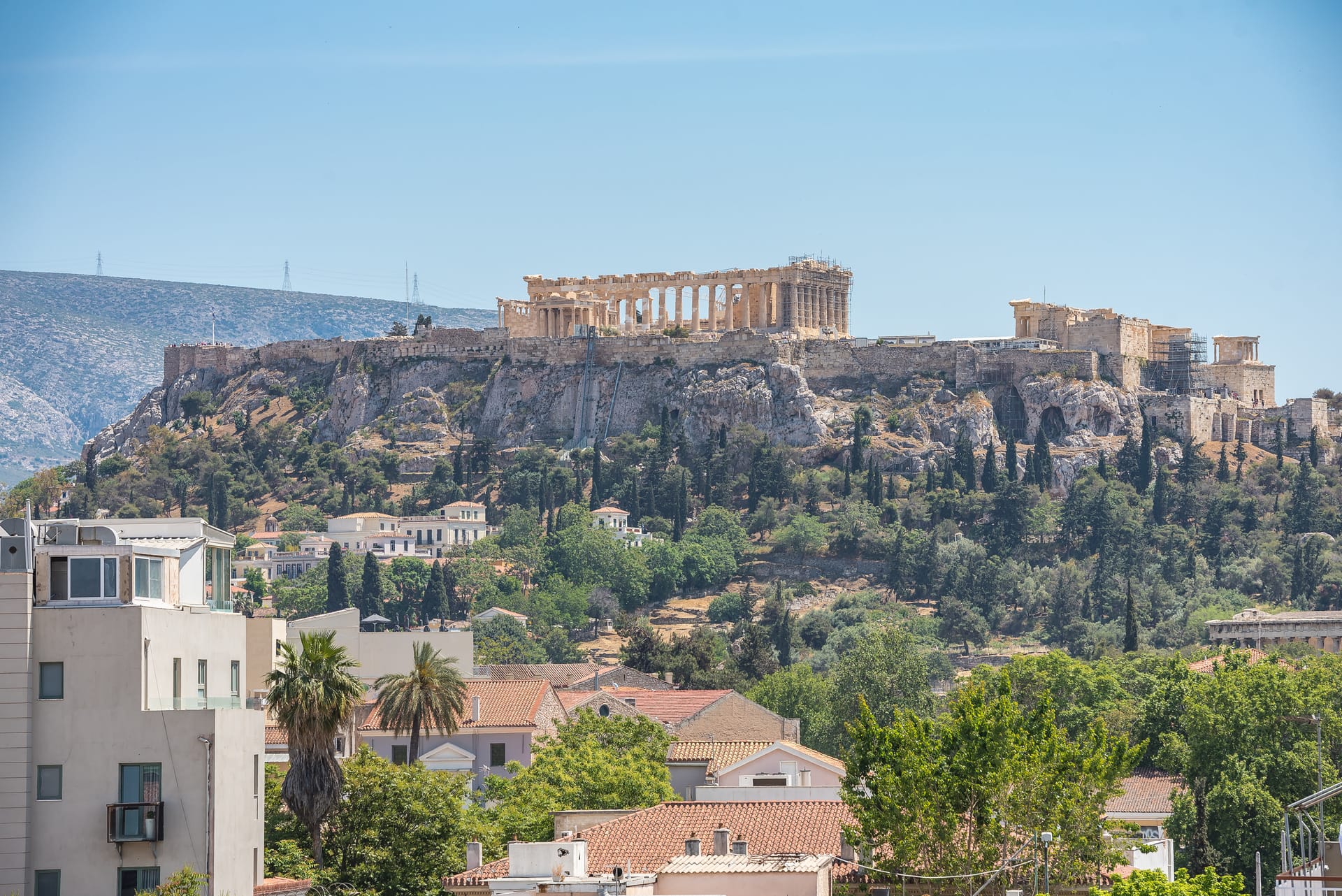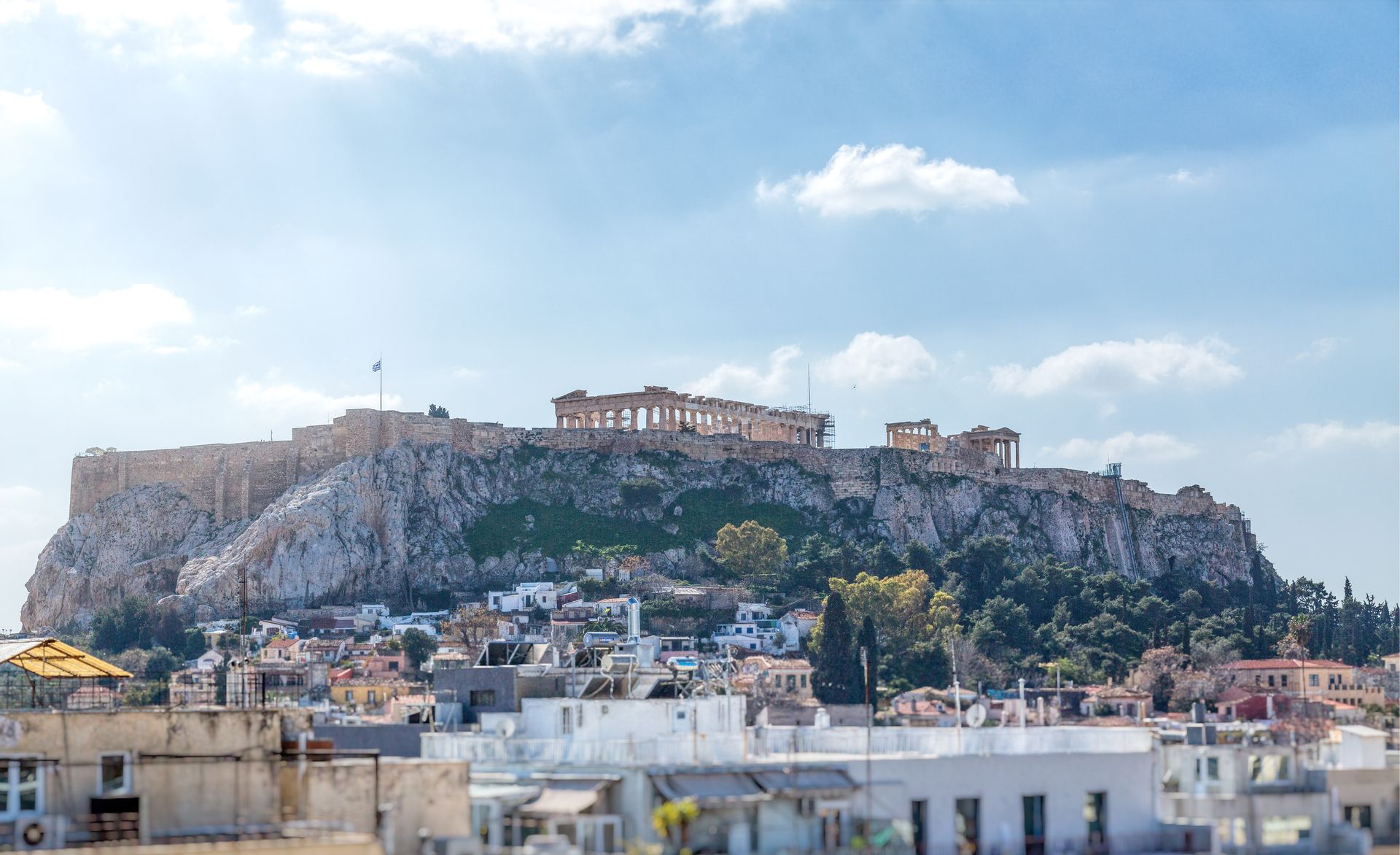
Athens is the capital of Greece and one of the world's longest continuously inhabited cities. The Acropolis still dominates the skyline from almost every neighbourhood, the Parthenon glowing white at sunset above streets of neoclassical balconies and Byzantine churches. The city has changed dramatically since the 2004 Olympics, with the airport metro, new pedestrian routes around the ancient sites, the world-class Acropolis Museum and a wave of restoration in old quarters like Plaka, Anafiotika, Psyrri and Koukaki. Yet beneath the polish, Athens remains a working Mediterranean capital: traffic, markets, late nights and a strong neighbourhood food culture.
The historic core is compact. The Acropolis itself, the Ancient Agora below it, the Roman Forum, Hadrian's Library, the Temple of Olympian Zeus and the Panathenaic Stadium are all within a 30-minute walk of each other along the Dionysiou Areopagitou pedestrian street. Plaka is the village-in-the-city quarter at the foot of the Acropolis, with whitewashed Anafiotika tucked into the rock above. Monastiraki and Psyrri lead the casual evening scene, Koukaki and Mets are the quieter residential neighbourhoods favoured by repeat visitors, and Kolonaki is the polished shopping and gallery district.
Athens is also the indispensable gateway to the Greek islands. The port of Piraeus is reached in 25 minutes by metro and is the main ferry hub for the Cyclades, Dodecanese and Saronic islands. The smaller port of Rafina, 30 minutes from the airport, runs ferries to Mykonos, Andros and Tinos. Most island itineraries begin or end with at least one night in Athens. Whether you have 24 hours or a week, the city repays slow walking, a rooftop bar with Acropolis view, and at least one long taverna lunch in a square shaded by orange trees.