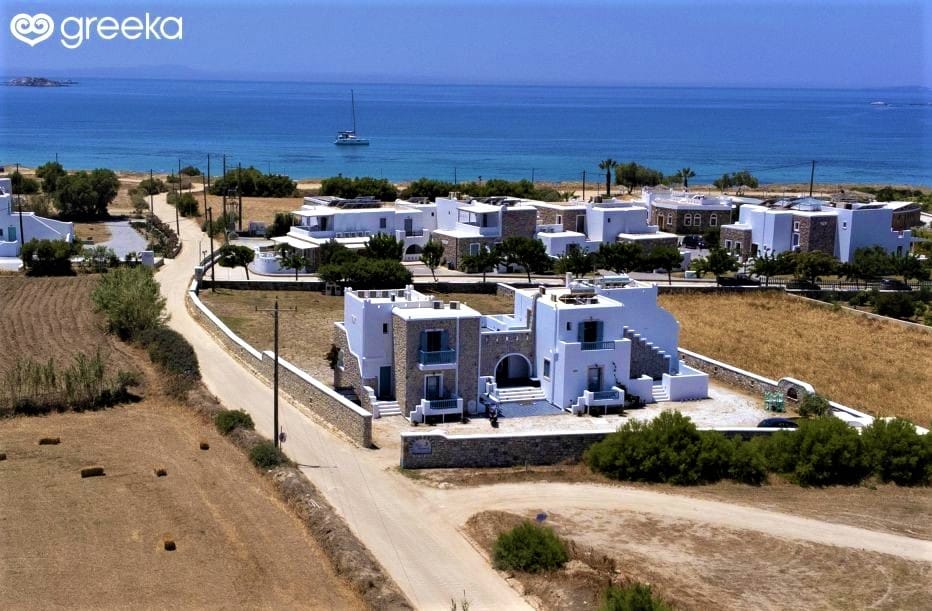
Naxos is the largest of the Cycladic islands and one of the most varied destinations in Greece. The island combines the photogenic whitewashed Chora and Venetian Kastro of Naxos Town with the longest sandy beaches in the Cyclades, a mountainous green interior of olive groves and marble villages, and ancient Apollo's temple gate that frames the harbour sunset. Naxos is fertile in a way most Cycladic islands are not: it grows its own potatoes, citrus, kitron lemon liqueur and graviera cheese, and even has cattle. Visitors come for sandy family beaches, the Cyclades' best windsurfing, and inland walks through villages like Halki, Apeiranthos and Filoti that few cruise tourists ever see.
Naxos works as a beach base, a culture base or both. The south-west coast strings together Agios Georgios, Agios Prokopios, Agia Anna and Plaka, four wide soft-sand beaches running south from the port, each progressively wilder. The east coast is rocky and quieter. The high interior climbs to Mount Zas, the tallest mountain in the Cyclades and, in myth, the birthplace of Zeus. The Tragea valley below it is a sea of olive trees dotted with Byzantine chapels.
Naxos has a more relaxed, slower feel than Mykonos or Santorini and substantially better value. It suits families with young children (the sandy south-west beaches shelve gently), couples wanting villas and apartments away from the cruise circuit, and culture travellers happy to combine a beach base with day trips to the smaller Cycladic islands. Ferries connect Naxos to almost every island in the group, making it an ideal island-hopping hub.